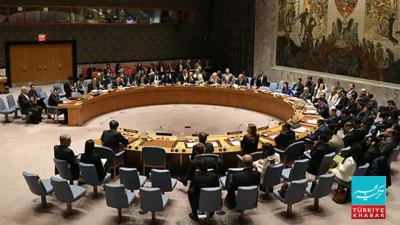
New York (Monitoring Desk) The United States and Bahrain have submitted a new draft resolution against Iran in the United Nations Security Council, calling for an end to attacks and disruptions against commercial vessels in the Strait of Hormuz.
Bahrain’s Permanent Representative to the UN Jamal Fares Al-Ruwaie presented the draft, stating that the Strait of Hormuz is a vital maritime route not only for Gulf countries but also for global trade and the world economy. The resolution urges Iran to immediately stop attacks and threats against commercial and cargo ships, including issues related to mines and alleged illegal toll collection.
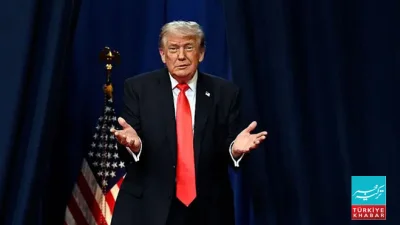
US envoy Mike Waltz claimed that Iran has attempted to collect fees from ships by establishing an authority in the Gulf, and said that the placement of mines and illegal barriers violates international maritime law. He asked member states to decide whether they stand with Iran or with Gulf countries.
The United Arab Emirates also stated that rising tensions in the Strait of Hormuz are negatively affecting global trade and energy markets.
However, the resolution faces opposition from Russia and China, and there is a possibility that it may be vetoed.
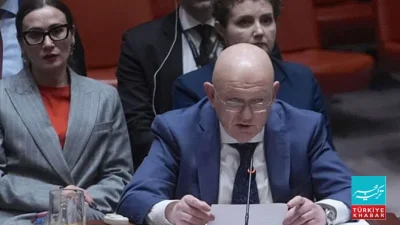
On the other hand, Iran has strongly rejected the US-Bahraini resolution, calling it one-sided and political. Iranian Ambassador to the UN Amir Saeid Iravani said that the United States is using the name of “freedom of navigation” to pursue its political interests.
He said that the real cause of the regional crisis lies in US and Israeli policies, while the seizure of Iranian ships and naval blockades were described as “acts of piracy.” He added that US allegations are baseless and aimed at defaming Iran internationally.
The Iranian envoy further stated that the solution to tensions in the Strait of Hormuz lies only in dialogue and ending military actions, warning that the current US approach is pushing the region toward further instability instead of stability.