
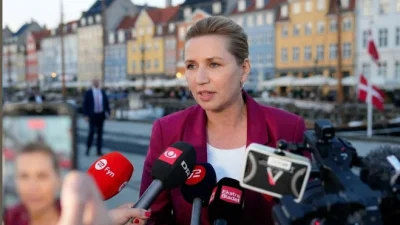
Copenhagen (Monitoring Desk) After more than two months of political uncertainty, a new government has been formed in Denmark. Social Democratic leader Mette Frederiksen has established a minority government, securing a third consecutive term as the country’s prime minister.
Following the general election, no political party was able to secure a clear parliamentary majority, resulting in lengthy coalition negotiations. After weeks of consultations among various political parties, an agreement was finally reached to form a new government.
Although Frederiksen’s Social Democrats emerged as the largest political force in the election, the party experienced a notable decline in parliamentary seats. Political analysts have described the result as one of the party’s weakest electoral performances in decades.
The new government faces several domestic and international challenges. Among the most significant is the growing tension with the United States over issues related to Greenland. Recent American statements regarding Greenland’s future have contributed to strains in relations between the two countries.
Mette Frederiksen has stated that Denmark will not compromise on its sovereignty or national interests. She emphasized that any unusual developments concerning Greenland’s status could have broader regional and global implications.
In addition, the continuing impact of the Russia–Ukraine War has reshaped Europe’s security environment, presenting another major challenge for the new administration. In response, Denmark has already increased its defense spending and expanded opportunities for women to serve in the armed forces.
Political observers believe that the success of the new government will depend on its ability to maintain internal unity, ensure economic stability, and effectively address the international challenges facing the country.